
Carbon Fiber Desks: An Honest Review of Pros, Cons, and Value
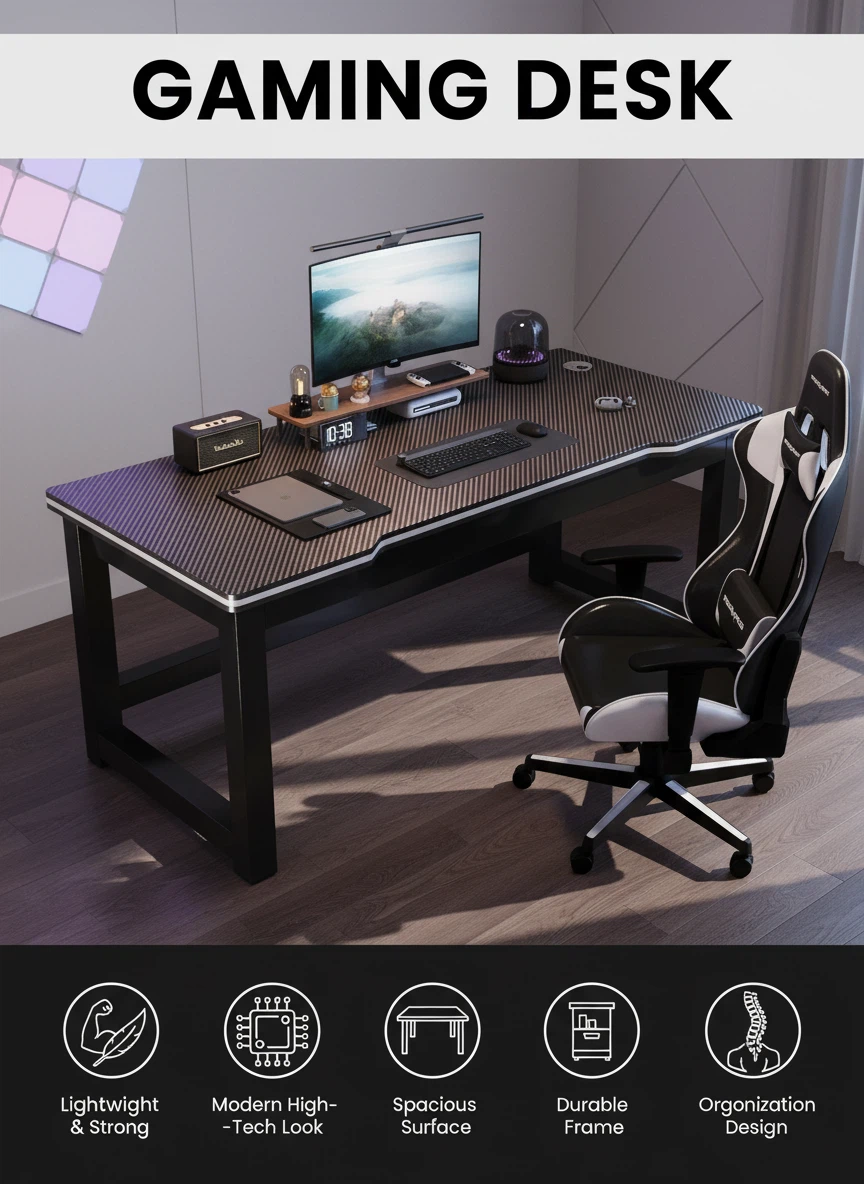
Considering a carbon fiber desk? Learn the truth about laminate vs. real carbon fiber, see a clear pros & cons table, and discover if the modern look is worth the price for your workspace.
Content:
Carbon fiber desks have a striking, high-tech look that appeals to gamers and professionals alike.
But are they a smart investment for your home office? The answer is more nuanced than you might think.
This review cuts through the marketing hype to give you a clear, practical assessment of carbon fiber desks, helping you decide if one is right for you.
First, A Critical Reality Check: Laminate vs. Structural Carbon Fiber
Before we discuss pros and cons, it’s essential to understand that most “carbon fiber” desks are not solid carbon fiber.
True structural carbon fiber is incredibly expensive and overkill for a stationary desk.
Instead, the vast majority of models use a carbon fiber-patterned laminate (like PVC) bonded over a core of MDF (Medium-Density Fiberboard) or particleboard.
The core and the steel frame provide the actual strength and stability. The carbon fiber layer is primarily a surface finish.
Why this matters: When you evaluate the desk, you’re often paying a premium for the aestheticand surface properties of the laminate, not the structural benefits of genuine carbon fiber.
Carbon Fiber Desk: Advantages vs. Disadvantages at a Glance
This table summarizes the key points to help you compare quickly.
| Advantages | Disadvantages |
|---|---|
| ✅ Lightweight & Portable (If genuine carbon fiber): Easy to move and assemble. | ❌ High Reflectivity: Glare from lights and monitors can cause eye strain. |
| ✅ Durable Surface (Laminate versions): Resists scratches, water, and stains; easy to clean. | ❌ Shows Dust & Pet Hair: The textured surface attracts and highlights dust and debris. |
| ✅ High Strength-to-Weight Ratio (Genuine carbon fiber): Extremely rigid and strong without being heavy. | ❌ High Cost: Even laminate versions are more expensive than standard MDF desks. |
| ✅ Modern Aesthetic: Offers a unique, sleek look that stands out. | ❌ Brittle Under Impact (Genuine carbon fiber): Can crack if hit with a sharp, heavy object. |
| ❌ Poor Resale Value: A niche product with limited demand on the second-hand market. |
A Closer Look at the Key Factors
| Feature Dimension | ��� Carbon Fiber Desk | ��� Wooden Desk |
| Core Physical Properties | Approx: 1.76 – 1.80 g/cm³
Stiffness: Young’s modulus approx. 90.5 GPa (higher than aluminum’s 69 GPa) |
Density: Varies by wood type. For example, North American rubberwood has a density of approx. 0.591 g/cm³, while common woods average around 0.351 g/cm³ . Solid wood offers a warm, natural texture and good flexibility . |
| Weight & Load-bearing | Excellent Lightweight Performance: Density is about 1/5 that of steel, making it very light and portable. Some products can bear loads up to 500kg . High Strength-to-Weight Ratio: Can achieve high load capacity with thin profiles (e.g., edge thickness of just a few millimeters) . |
Weight Varies by Material: Solid wood desks are typically heavier, offering good stability. For example, desktops made with 30mm thickened North American rubberwood are very sturdy . Reliable Load-bearing: High-quality hardwoods (like beech) used in internal frames provide excellent load-bearing performance . |
| Environmental Impact & Safety | Challenging Recycling: Mainstream carbon fiber composites (thermoset resin-based) are currently difficult to recycle . Material Safety: The material itself is stable, but the production process is relatively complex. |
High: Wood is a renewable, biodegradable resource . Eco-standard: Focus on formaldehyde emission levels. National standards stipulate that wooden furniture formaldehyde emission should be ≤0.08mg/m³. Solid wood and panels meeting E0/E1 standards are safer . |
1.This is the most common user complaint. The woven, shiny surface is highly reflective. Positioning a desk lamp to avoid harsh glare in your eyes can be a constant challenge, making it less ideal for tasks requiring focused lighting.
2.Dust Magnet:
The textured pattern effectively attracts and traps dust, lint, and pet hair. If you have pets that shed, be prepared for frequent wiping to keep the desk looking clean.
3.Cost vs. Value:
You pay extra for the carbon fiber look.Laminate desks cost more than equivalent non-carbon fiber models, while true carbon fiber desks are a luxury investment.
Since it’s a niche style, resale value is typically low.
Genuine Benefits to Consider
1.Surface Durability:
For laminate desks, the top layer is a practical advantage. It’s typically a non-porous, polymer coating that protects the MDF core from water rings, pen marks, and minor scratches.
A quick wipe with a damp cloth is usually all that’s needed for cleaning.
2.Lightweight Design (If Real): If you find a desk made with genuine carbon fiber composite, its light weight is a significant benefit for rearranging your room or moving homes.
Final Verdict: Who Is This Desk For?
A carbon fiber desk is a good choice if you:
- Prioritize a modern, high-tech aesthetic above all else.
- Don’t rely heavily on bright, direct task lighting.
- Live in a low-dust environment without shedding pets.
- Are willing to pay a premium price for a specific look.
You might be better served by a different desk if you:
- Are budget-conscious and want the best functional value.
- Need a glare-free surface for reading, writing, or detailed work.
- Want a low-maintenance surface that doesn’t show every speck of dust.
- Care about long-term resale value.
For most people, a high-quality desk with a steel frame and a well-finished wood, laminate, or matte surface offers better everyday functionality at a lower cost. Reserve a carbon fiber desk for situations where its unique appearance justifies the trade-offs.


Leave a Reply
Want to join the discussion?Feel free to contribute!