
European Carbon Fiber Automotive Parts Market: Top Company Rankings and Market Insights
If you are seeking high-quality lightweight solutions for your automotive project or aiming to provide superior performance upgrade options for your customers, then the European carbon fiber automotive parts industry is undoubtedly a field you must understand. In this article, we will reveal for you:
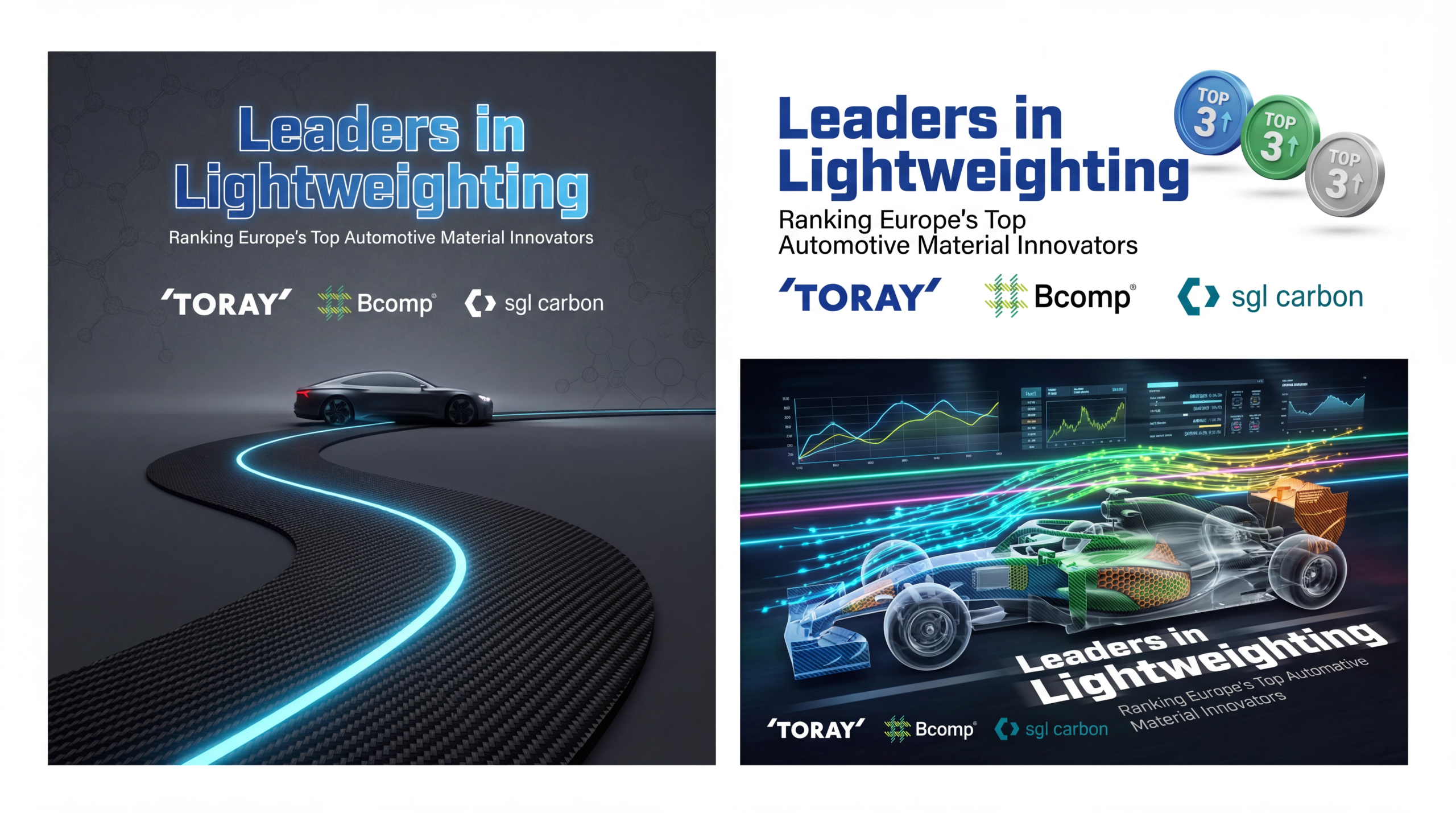
1.Market Overview: Why Europe’s Carbon Fiber Industry Leads the World.
Europe’s leadership in the carbon fiber automotive parts field is no accident. It is the result of a combination of three key advantages.
Profound Technical Heritage:
The material science and engineering experience accumulated over decades in cutting-edge fields like aerospace (aircraft, satellites, launch vehicles) has been systematically transferred to the automotive industry. This has created a complete technological system from basic R&D to mass production, keeping European companies at the forefront of composite material development.
Complete Industrial Chain:
Europe has built an integrated production chain spanning from carbon fiber precursor, intermediate materials, to final components. This complete layout not only enables efficient synergy and technological integration across all stages but also establishes a full-process quality control system from source to finished product, fundamentally ensuring product consistency and supply chain stability.
Clear Market Demand:
The continuous innovation from European luxury car brands and a thriving motorsport culture provide sustained high-end demand for carbon fiber applications, driving constant technological iteration.
Leading Environmental Standards: The EU’s stringent environmental regulations push companies to develop more sustainable carbon fiber production and recycling technologies, acting as a key driver for the industry’s upgrade to a higher value stage.
2.Evaluation Criteria: How We Select Quality Suppliers.
Our ranking is based on a comprehensive assessment across five dimensions:
Technical Capability: Number of patents, R&D investment, process innovation.
Product Quality: Certification systems, quality control processes, product consistency.
Production Scale: Production capacity stability, equipment advancement, supply chain management.
Market Performance: Customer reviews, industry reputation, project case studies.
Service Capability: Customization level, technical support, delivery reliability.
3.Core Rankings: Detailed Analysis of Major European Carbon Fiber Parts Companies
| Rank | Company Name | Headquarters Location | Core Expertise | Major Clients / Application Fields | Unique Advantage |
| SGL Carbon | Germany | BMW, Audi, McLaren | Deep collaboration with BMW, extensive mass-production experience. | ||
| Toray Europe | France | High-end prepregs and composites | Ferrari, Porsche, Airbus | Global leader in carbon fiber raw materials. |
| Bcomp | Switzerland | Sustainable composite materials | Electric vehicles, Motorsport | Eco-innovation, natural fiber composite technology. |
4.Application Analysis: How These Parts Enhance Vehicle Performance
4.1 Performance Enhancement Across Three Levels.
Weight Reduction:
Carbon fiber components can reduce weight by 30%-70% compared to traditional metal parts, directly impacting acceleration, braking, and handling response.
The core benefit lies in reducing unsprung mass, which improves the power-to-weight ratio for better acceleration, reduces brake system load for shorter stopping distances, and significantly enhances suspension dynamic response for more precise handling.
Stiffness Enhancement:
The specific stiffness of carbon fiber composites is significantly higher than traditional metals (approx. 18% higher than aluminum, 14% higher than steel). Higher specific stiffness leads to better chassis response and driving precision.
Aesthetic Value:
The unique weave and gloss serve as visual identifiers for high-end cars. For example, carbon fiber styling kits from ultra-luxury brands like Bentley maximize the visual appeal of this material.
4.2 Key Application Scenarios.
Exterior Kits: Front splitters, side skirts, rear diffusers, spoilers.
Interior Upgrades: Steering wheels, paddle shifters, interior panels.
Structural Reinforcement: Chassis braces, anti-roll bars, engine mounts.
Functional Components: Drive shafts, brake system components, battery enclosures.
5.Collaboration Path: How to Work With Us to Develop Market Opportunities.
5.1 Support We Can Provide You.
As a specialized partner deeply entrenched in European supply chains, we can provide you with:
Resource Connection: Match you with the most suitable suppliers based on your specific needs, avoiding the “needle in a haystack” search.
Quality Control: Establish a dual inspection system to ensure every product meets your standards.
Logistics Optimization: Consolidate transportation resources to reduce cross-border logistics costs and time.
Technical Support: End-to-end technical assistance, from material selection advice to installation guidance.
5.2 Collaboration Models.
| Collaboration Type | Suitable For | Service Content |
| Procurement Agency | Small/Medium-sized tuners, distributors | Provides full suite of procurement, quality inspection, and logistics services. |
| Joint Development | Automotive companies/high-end brands with customization needs | Co-design, prototyping, and mass production of new products. |
| Technical Consulting | Companies looking to enter the carbon fiber field | Provides market analysis, supplier evaluation, and technology roadmap planning. |
6.Future Outlook: Industry Trends and Strategic Advice.
6.1 Three Key Trends:
(a).Cost Reduction: As processes optimize and recycling technologies mature, carbon fiber is moving from supercars to high-volume premium cars.
(b).Smart Manufacturing: Technologies like automated fiber placement and 3D weaving will increase efficiency and reduce reliance on manual labor.
(c).Sustainable Development: Bio-based carbon fibers and efficient recycling technologies are becoming the next core focus of competition in the carbon fiber industry. This is both a necessary response to environmental pressures and a strategic move to capture future market high ground.
6.2 Strategic Advice for You:
(a)Short-term Strategy: Start with parts that offer clear performance benefits, such as exterior kits and interior components, to quickly validate the market.
(b)Medium-term Plan: Establish stable European supply chain relationships and gradually introduce more complex structural components.
(c)Long-term Planning: Pay attention to carbon fiber recycling and sustainable material directions, planning and developing green technologies in advance.
Conclusion
The European carbon fiber automotive parts industry is at a critical juncture, transitioning from a “luxury item” to a “high-performance necessity.”
For enterprises aspiring to make strides in automotive lightweighting, now is the optimal time to enter this field.
We invite you to have an in-depth conversation with us to explore together:
What are your specific requirements?
How can top European carbon fiber technology be translated into your market advantage?
How can we assist you in building a unique competitive edge in the global market?
Contact us immediately, and let us customize an exclusive European carbon fiber supply chain solution for you, together opening a new chapter in high-performance automobiles.


Leave a Reply
Want to join the discussion?Feel free to contribute!