
2026 Carbon Fiber Electric Bicycle Frame Components Guide: The Synonym of Lightweight and High Performance
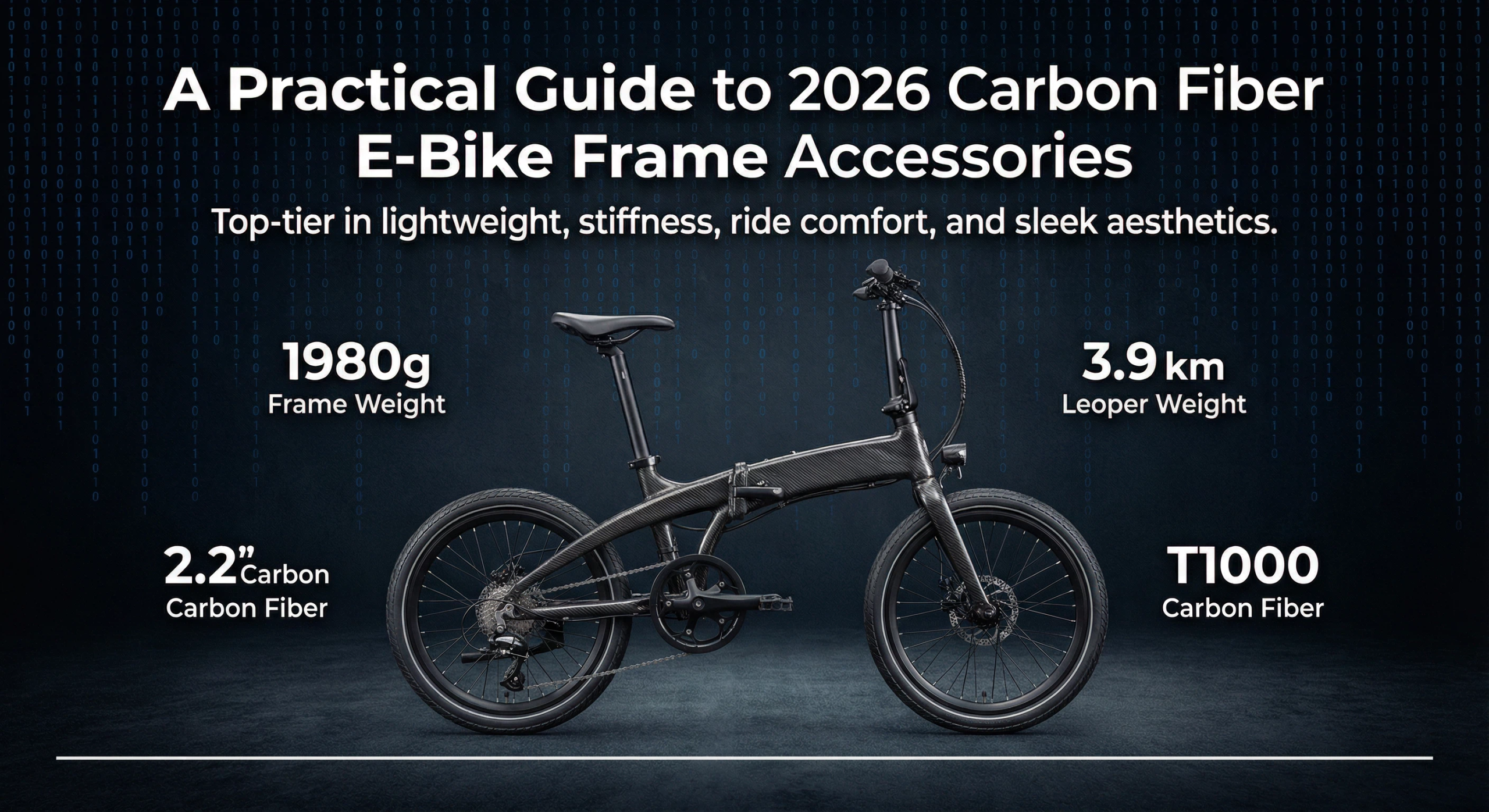 In 2026, the material revolution in the electric bicycle market continues to deepen.
Carbon fiber composites have become the preferred material for high-end electric bicycle frames due to their significant lightweight and high-strength characteristics.
Data shows that the global market size for carbon fiber composite bicycle frames reached approximately USD 889 million in 2024 and is projected to grow to USD 1.8 billion by 2031, with a compound annual growth rate (CAGR) of 10.3%, reflecting strong market demand for high-performance materials.
1. Why Choose a Carbon Fiber Frame?
The exceptional performance of carbon fiber frames is the core reason for their popularity.
They weigh only one-third of aluminum frames yet are 7 times stronger, which can improve riding efficiency by 30% to 40%.
Specifically, a frame using T800-grade carbon fiber can weigh as little as 2.8 kg while supporting a load of 181 kg, perfectly meeting the stringent requirements for weight reduction and extended range in electric-assist bicycles.
2. The Outstanding Advantages of Carbon Fiber Frames
2.1. Extreme Lightweight
Carbon fiber has a density of only about 1750 kg/m³, less than a quarter that of steel, yet possesses 7-9 times the tensile strength.
This high strength-to-weight ratio allows carbon fiber frames to significantly reduce overall weight while ensuring structural integrity.
For electric bicycles, this translates directly to longer battery range and more agile handling.
2.2. Exceptional Strength and Stiffness
Carbon fiber resin composites can achieve tensile strengths exceeding 3500 MPa and elastic moduli as high as 23000-43000 MPa.
This characteristic ensures the frame maintains its shape stability under riding impacts and loads, providing a safe and reliable support platform for the motor and battery system.
2.3. Excellent Corrosion Resistance
Unlike metallic materials, carbon fiber does not rust and can resist erosion from various chemicals.
Whether riding in rain or humid environments, carbon fiber frames maintain long-term stability, extending the vehicle’s service life.
2.4. Design Freedom and Aesthetics
Carbon fiber material enables the creation of complex aerodynamic shapes that are difficult to achieve with traditional metals.
Its unique woven texture and feel also give the frame a high-tech aesthetic, meeting enthusiasts’ demands for beauty and individuality.
Carbon fiber has become an ideal replacement for traditional metal materials in many fields due to its unique performance advantages.
The following table summarizes its core characteristics compared to several common materials for quick reference.
| Property | Carbon Fiber Composite (CFRP) | Aluminum Alloy | Steel | Fiberglass | Plastic (e.g., ABS) |
| Density (g/cm³) | ~1.5 – 1.8 | ~2.6 – 2.8 | ~7.8 – 7.9 | ~2.0 | ~0.9 – 1.4 (varies by type) |
| Specific Strength | Very High | Medium | Low | High | Low |
| Tensile Strength (MPa) | Typically >1500; High-Performance: 3500-7000 | ~400 – 700 | ~1000 – 1200 | ~1000 – 1200 | Typically <100 |
| Tensile Modulus / Stiffness (GPa) | ~135 – 700, Highly Design-Dependent | ~69 – 79 | ~200 – 210 | ~40 – 48 | Very Low (Typically 2-3) |
| Lightweight Effect | Extreme, ~75% lighter than steel, ~40% lighter than aluminum | Good, ~60% lighter than steel | (Benchmark) | Moderate, lighter than steel but heavier than CFRP & Al | Good, but low strength |
| Corrosion Resistance | Excellent, does not rust, resistant to acids and alkalis | Good, but can corrode in specific environments | Poor, requires anti-rust treatment | Good | Varies by type, generally good |
| Fatigue Resistance | Excellent | Good | Poor | Medium | Poor |
| Main Advantages | Extremely high specific strength & modulus, design freedom, fatigue resistance, corrosion resistance, good damping | Cost-effective, mature technology, easy to process | High strength, low cost, very mature technology | Lower cost, good insulation, corrosion resistant | Lowest cost, easy molding, insulation |
3. Key Components and Innovative Designs of Carbon Fiber Frames
3.1. Structural Design Innovation
The latest carbon fiber electric bicycle frames adopt a separated design between the front triangle assembly and the rear triangle assembly, connected by a suspension mechanism.
This design disperses the suspension reaction force onto a specially designed load-bearing base instead of directly acting on the frame’s seat tube, greatly enhancing the frame’s stability and durability.
3.2. Frame Number Identification Innovation
To comply with new electric vehicle regulations while avoiding damage to the carbon fiber structure from traditional engraving methods, the 2026 innovative design involves creating a 1.2mm deep frame number installation slot at the rear end of the load-bearing base, with a dedicated frame number plate bonded inside.
This design meets regulatory requirements while ensuring the structural integrity of the frame.
3.3. Battery Integration Design
Carbon fiber frames often feature a dedicated battery installation compartment within the down tube, achieving integrated battery and frame assembly.
This design not only optimizes the vehicle’s center of gravity but also enhances appearance cleanliness and aerodynamic performance.
4. Maintenance and Care for Carbon Fiber Frames
4.1. Cleaning
Regularly wipe the surface with a clean, soft cloth or sponge. Avoid using hard-bristled brushes or chemical cleaners to prevent damaging the carbon fiber surface.
4.2. Storage
Store in a dry, well-ventilated environment.
Avoid prolonged exposure to damp conditions or direct sunlight.
As carbon fiber material can potentially age under high temperature and UV exposure, the choice of storage environment is particularly important.
4.3. Regular Inspection
It is recommended to conduct a comprehensive inspection of carbon fiber components every quarter or half-year, including checking the appearance, and the tightness of connections and fixing screws.
Pay special attention to signs of discoloration, mildew spots, or other indications of moisture exposure.
4.4. Professional Repair
Once damaged, carbon fiber material is difficult to repair.
If cracks or breaks appear, it is advised to send the frame to a professional repair shop or the manufacturer for handling.
Common repair methods include patch repair and thermosetting repair.
5. How to Choose a Carbon Fiber Electric Bicycle Frame?
5.1. Define Usage Scenario
Different riding environments place different demands on frame performance.
Urban commuting prioritizes comfort, while mountain biking requires stronger shock absorption and impact resistance.
Choose the appropriate frame design and carbon fiber layup scheme based on the primary usage scenario.
5.2. Certification and Quality
Select products that comply with industry standards and quality certifications. Pay attention to the manufacturer’s reputation and product quality record to ensure the frame meets necessary safety standards.
5.3. Craftsmanship Details
Check if the frame surface is smooth and even, and if the carbon fiber weave is uniform.
Focus on the processing quality at connection points, such as the reinforcement design at critical areas like the suspension mounts and rear triangle connection points.
5.4. Brand and After-Sales Service
Choose brands with comprehensive after-sales services to ensure timely technical support and warranty service during use.
5.5. Compatibility and Upgrade Potential
Consider the compatibility of the frame with existing or planned components (such as motor, battery, transmission system), and whether it leaves sufficient room for upgrades.
6.Conclusion: The Future of Carbon Fiber and Electric Bicycles
With the continuous growth in demand for lightweighting in 2026 and the ongoing maturation of carbon fiber technology, carbon fiber electric bicycle frames are transitioning from the high-end market towards the mainstream.
Their unique performance advantages and innovative design possibilities bring new development opportunities to the electric bicycle industry.
For manufacturers, mastering the latest technology and market trends for carbon fiber frames is key to competing in an intense market.
For cycling enthusiasts, choosing a high-quality carbon fiber frame means a safer and more enjoyable riding experience.
The integration of carbon fiber technology with electric bicycles represents the future direction of cycling culture – lighter, stronger, and smarter.
With advancements in materials science and manufacturing processes, we have reason to believe that carbon fiber will play an increasingly important role in the electric bicycle field, driving the entire industry towards higher performance and sustainable development.


Leave a Reply
Want to join the discussion?Feel free to contribute!